
Finalist Interview: NFinite’s ultra thin films
Nominated in the Startup New Materials category of Packaging Europe’s Sustainability Awards, NFinite shares details of its AP-SALD
Nominated in the Startup New Materials category of Packaging Europe’s Sustainability Awards, NFinite shares details of its AP-SALD

With just a few days to go until the 2026 Sustainability Awards, we hear from a previous winner to see

Nominated in the Startup New Materials category of Packaging Europe’s Sustainability Awards, NFinite shares details of its AP-SALD platform, which enables the deposit of ultra-thin conformal inorganic thin films on paper.
You’re a finalist in the Sustainability Awards 2026. Congratulations! To start off, could you summarize your entry in less than 50 words?
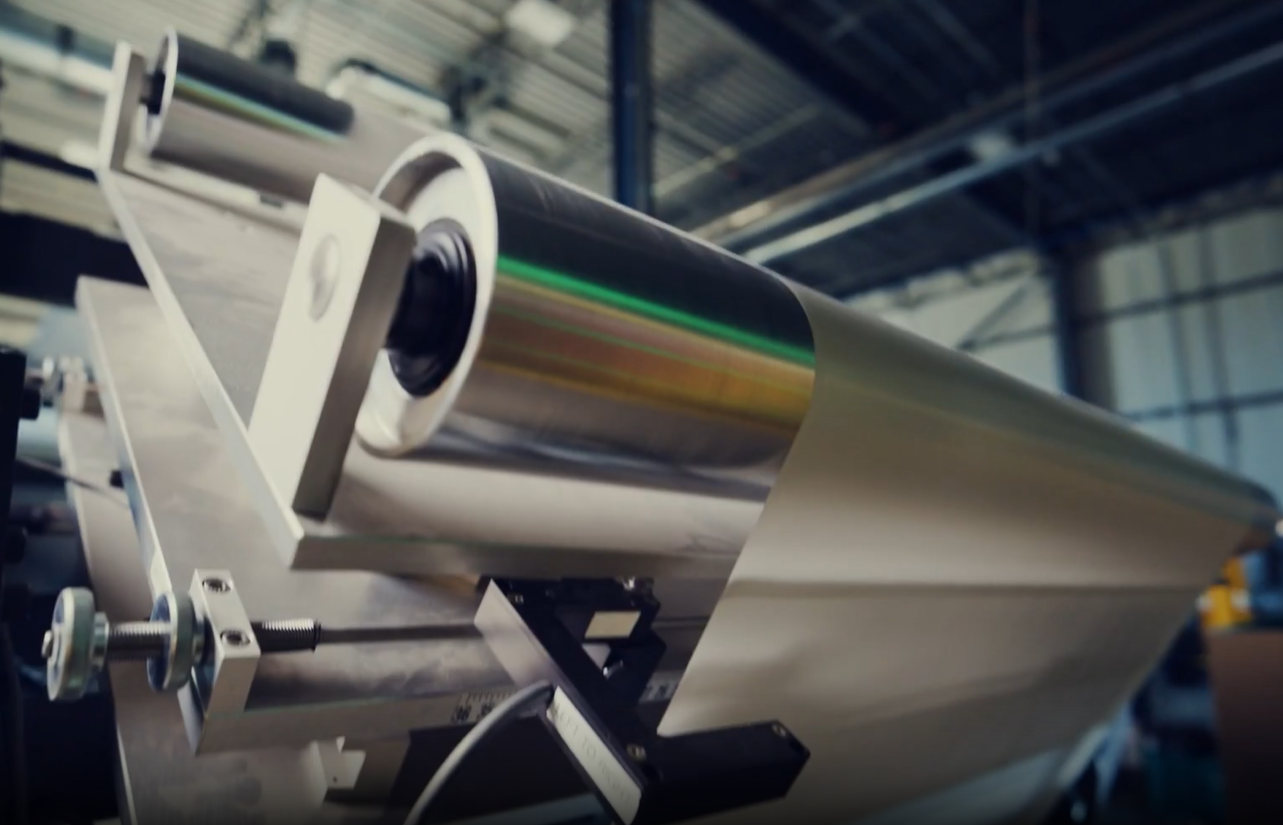
Nfinite’s AP-SALD platform deposit ultra-thin, conformal inorganic thin films on paper, in an atmospheric roll-to-roll process. This allows paper to be coated with ultra-thin films, below the typical thicknesses of laminated or extruded polymer films. This brings paper up to the same performance characteristics found with metallized plastic multi-layers.
Why do you think the judges were impressed with your entry? What is innovative about your project and its impact on packaging sustainability?
Paper has long been considered one of the most exciting alternatives to flexible plastic packaging. Despite advances in fibrous materials, however, paper packaging has failed to replace plastic in many food and consumer goods applications due to its inability to provide adequate barrier protection.
Atomic Layer Deposition (ALD) has shown great promise in offering outstanding barrier protection by forming transparent ultra-thin ceramic layers at nano scale. To date, however, the application of ALD has been limited to specialist industries such as semiconductor and electronics due to the difficulty of applying the technology in high speed continuous processes for flexible substrates.
Nfinite’s AP-SALD technology enables extremely high barrier properties on a paper substrate. Our solution provides outstanding performance while being fully recyclable and scalable.
This enables us to offer a versatile solution that fits in with current flexible packaging supply chains. This allows consumer packaged goods and other brands to reduce plastic usage and carbon emissions.
Can you tell us about the ongoing development of your project, industry reception and next steps?
We have received extremely positive feedback from leaders across the CPG industry. Our work with CPG and converters focuses on providing sustainable alternatives to non-recyclable flexible packaging. Our partnership with Amcor, for example, underscores the importance of working within the existing value chain to make sure these materials can be manufactured.
We recently reached another key manufacturing milestone, by demonstrating our proprietary AP-SALD technology can be continuously manufactured at industrially relevant speeds.
This recent milestone provides a real boost to our current project where we are developing pilots and early scale-ups. For next steps, we plan to focus on increasing production, building more partnerships, and helping brands adopt the technology with commercial quantities. Overall, we want to contribute to the ongoing shift to circular fiber-based packaging.
The winners of this year’s Sustainability Awards are due to be announced on the 11th November at the Sustainable Packaging Summit, taking place from the 10th-12th November in Utrecht, Netherlands. The Summit mobilizes leaders of the FMCG value chain, policymakers, NGOs, recyclers and investors to collaborate, remove barriers and identify opportunities on the road to sustainable transformation.
To learn more or register, visit: https://www.packagingsummit.earth
If you liked this story, you might also enjoy:
The ultimate guide to packaging innovation in 2026
Packaging and Packaging Waste Regulation: what to know in 2026
Everything you need to know about global packaging sustainability regulation
Strategic learnings from the Sustainable Packaging Summit

Solidus is introducing Futurline Heat&Eat, a new trademark for its range of fibre-based modified atmosphere packaging (MAP)

Label and packaging printers are under increasing pressure to produce more jobs, in shorter runs, with tighter margins and less

In our latest Spotlight, Arnaud Brunet, Senior Director Portfolio and Sustainability at CRYOVAC®, looks at why food packaging has to

As PET bottles incorporate more recycled content, become lighter and adopt label constructions, the adhesive securing the label must perform

Is the overlap between policy, circularity, and renewable materials a sweet spot for packaging innovation – and how do we make

In our latest Spotlight, we learn how Coexpan and Emsur, part of Grupo Lantero, help companies to protect cheese, improve

PPWR is a data challenge. In this Spotlight, we find out how Centric Software® tackles the challenge through a connected

In this Spotlight, Plastipak discusses the opening of its PET material centre in Verbania, Italy. Home to pakPET™ Single Pellet


BENZ Packaging has implemented a minimum of 30% post-consumer recycled polyethylene into its vapour corrosion inhibitor (VCI) films, seeking

Orkka has revealed its Hand Stretch Film Dispenser, part of its Pallet Performance range and designed to provide greater control
Is the overlap between policy, circularity, and renewable materials a sweet spot for packaging innovation – and how do we make