


Duynie has decades of experience in developing applications for side-stream potato starch. With Novinexx CPB, the company is applying this knowledge to paper sack adhesives. The adhesive is modified using a new technology, offering added value to the paper sack industry.
In this edition of our 'In Conversation With…' series, we speak with Sam van den Berg, Commercial Manager at Duynie, about why adhesives deserve renewed attention, how technical improvements can create measurable value for paper sack manufacturers, and why close cooperation between adhesive suppliers and production teams is key to successful implementation.

Sam van den Berg, Commercial Manager at Duynie
How has paper sack production evolved, and what role should adhesives play in its next stage?
Paper sack production has made major progress over the past decades. Machines operate at higher speeds, production is more automated and safer, and paper quality has continued to develop.
Adhesives have not always developed at the same pace. In many cases, manufacturers are still using adhesive solutions that are based on technology from decades ago. This potentially limits their output.
Adhesive may represent a relatively small part of the total production process, but it has a direct influence on how well the entire production line performs. At Duynie, we believe adhesives should be treated as a production technology rather than as a consumable, and we have developed Novinexx CPB with that principle in mind.
What hidden operational costs can result when an adhesive is not aligned with modern production?
The cost is not always visible on the adhesive invoice, but the effects appear elsewhere in production. If an adhesive is not suited for the machine or paper, operators may need to reduce the production speed. The machine might be able to run faster, but doing so could lead to inconsistent application or quality problems. For example, when an adhesive penetrates paper, it can cause sacks to stick together, resulting in rejected batches.
Another cost factor is adhesive build-up on machine parts due to splashing, which can lead to more frequent cleaning and longer production stops. This reduces productive machine time and adds to labour and maintenance costs.
Curing time also has a wider impact. If sacks need longer to dry before they can be shipped, they remain in stock for longer, increasing inventory levels and tying up working capital.
What limitations did Duynie identify, and how did these shape Novinexx CPB?
Most paper sack manufacturers want an adhesive that has a high starch-to-water mixing ratio, because you essentially have more adhesive for a lower cost price. This however can come at the expense of performance. More water often means longer curing, a higher risk of mould, more splashing and cleaning, and a higher chance of paper penetration. These limitations shaped the development of Novinexx CPB.
Improved safety is another benefit of Novinexx CPB. When powdered adhesives containing preservatives are deposited and mixed, dust can be inhaled or come into contact with skin and eyes, causing irritation. Reducing dust formation therefore helps limit exposure and keeps the adhesive preparation area cleaner and safer. In controlled comparative testing, Novinexx CPB showed the lowest dust formation. The lack of a GHS hazard pictogram further supports a safer working environment.
Lastly, Novinexx CPB is certified food-contact safe, helping our customers to produce sacks that are suitable for food-contact applications.
How does Duynie’s new technology influence adhesive performance?
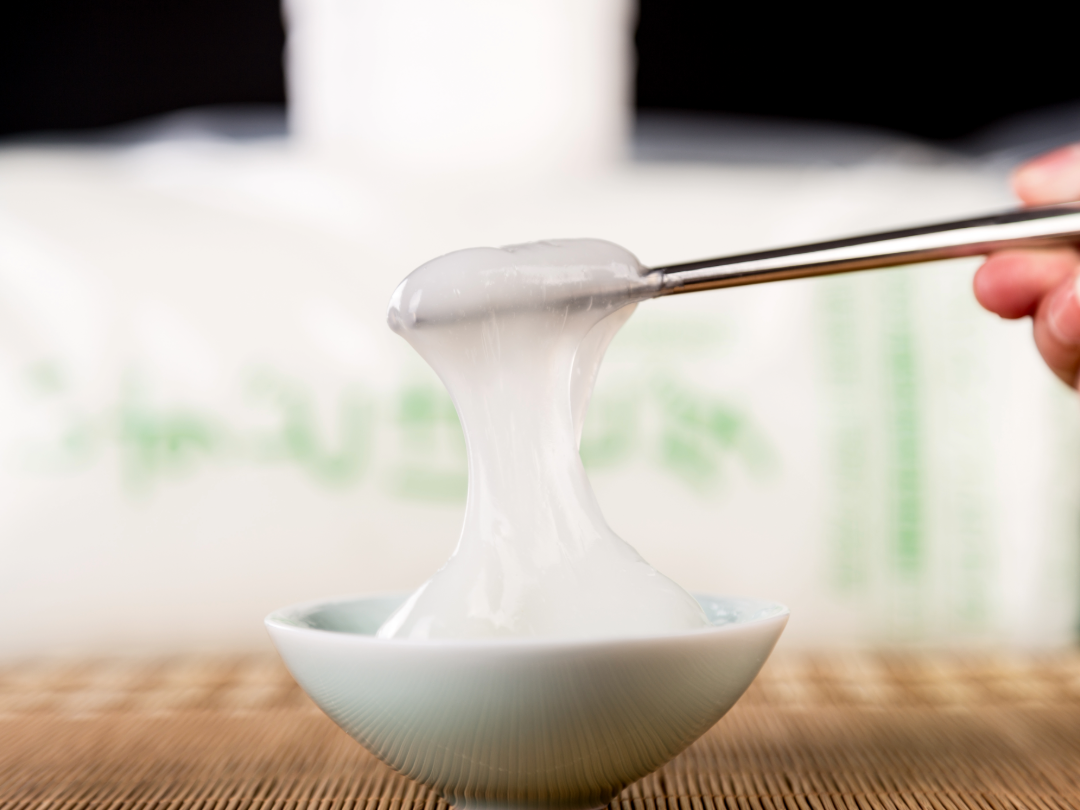
Our new cross-linking technology changes the properties of the starch and helps balance several characteristics relevant to paper sack production. It allows for a high mixing ratio (1:4.5) with the benefits usually seen in adhesives with a low mixing ratio (1:3). In comparative testing, Novinexx CPB shows low splashing behaviour, reliable bonding without paper penetration, stable viscosity, easy cleanability and fast curing.
How do the technical characteristics translate into measurable production value?
We look at what happens on the production floor. Does the machine run more consistently with Novinexx CPB? How often and for how long does it stop for cleaning? How much adhesive is being used? And how long do sacks need to cure before they can be shipped? These gains in efficiency can be measured and translated into production value.
The outcome differs from one factory to another. That is why Novinexx CPB is tested under the manufacturer’s own operating conditions. Our adhesive specialists work with operators on site to get the best performance from both the adhesive and the production line. Based on the results, we can calculate the potential operational savings for the manufacturer.
What other benefits does Novinexx CPB offer?
The adhesive is made from potato starch recovered from process water at French fries and chips factories. We refine this existing side stream and only modify the highest-quality starch to produce Novinexx CPB. This means no additional potatoes are required specifically to produce the starch. This may help customers lower Co₂ emissions, water- and land-use, supporting their scope 3 emission-reduction goals. We have a Life Cycle Assessment (LCA) available to provide customers with supporting data for their sustainability reporting.
Where does Duynie see the next opportunities for adhesive innovation?
We are currently working with partners to apply Novinexx CPB in digital pasting machines, and we see great potential here. Additionally, we also keep researching and improving Novinexx CPB to give our customers even more value. If you would like to know more about Novinexx CPB or test it, feel free to contact me (Sam van den Berg) through the Duynie website.
Click here to learn more about Novinexx CPB.
Sponsored stories

Plastipak opens PET material centre to advance recycled content solutions
In this Spotlight, Plastipak discusses the opening of its PET material centre in Verbania, Italy. Home to pakPET™ Single Pellet

FOREST-PKG is helping packaging people find the right people faster
In the latest edition of the Spotlight, Matthew Wright, Founder and CEO of FOREST-PKG, shares why finding the right


2D Coding: Redefining the role of flexible packaging
In this edition of The Spotlight, Markem-Imaje examines how 2D coding is redefining the role of flexible packaging and


DuPont launches Tyvek® with Renewable Attribution
The material that consumer and industrial (C&I) applications rely on just got a sustainability upgrade. DuPont talks us


‘Brilliance without the film’ – Shunho’s plastic-free metallic material
Utilizing vacuum aluminizing and laser-writing technologies, Shunho Creative (a sub-brand of Shanghai Shunho International) has developed a plastic-
Read next
Plastipak opens PET material centre to advance recycled content solutions
In this Spotlight, Plastipak discusses the opening of its PET material centre in Verbania, Italy. Home to pakPET™ Single Pellet

Sustainability Awards 2026 Finalist Interview: Bel Group’s recyclable pouch packaging
Nominated in the Readers Award category, Bel Group’s project combines a redesigned lightweight cap with a mono-material PE

Silgan to acquire Trivium and form $7.3 billion metal packaging business
In a proposed transaction, Silgan Holdings, Trivium Packaging and American Industrial Partners plan to form two differentiated packaging platforms, including

Billerud unlocks fibre-based blister lidding, sachets and more in pharma
Billerud’s new PharmaKraft material offers a recyclable, fibre-based alternative for non-sterile sachets, stick packs, strip packs and